Where are the Dolomites? A complete guide to Italy’s iconic mountains

Updated: Oct 27, 2025
If you are planning a trip to Italy and wondering where are the Dolomites, you are not alone. These stunning mountains, also known as the Dolomite Alps, are one of the country’s most spectacular natural wonders and a UNESCO World Heritage Site. But where exactly are they located, and what makes them so special?
Where are the Dolomite Mountains located?
The Dolomites are in northeastern Italy, stretching across the regions of Veneto, Trentino-Alto Adige/South Tyrol, and Friuli Venezia Giulia. Covering around 15,900 square kilometers, the Dolomite mountain range extends from the Puster Valley (Val Pusteria) in the north to the Valsugana Valley in the south, and from the Piave Valley in the east to the Adige Valley in the west.
In short, if you ask where are the Italian Dolomites, the answer is: they span across several provinces, including Belluno, Bolzano, Trento, Udine, and Pordenone.
A map of the Dolomites
To better understand where the Dolomites are located, here’s a map showing their position in northeastern Italy:

The most famous mountains in the Dolomites
The Dolomites are home to some of the most iconic peaks in the world. Among the best-known are:
Tre Cime di Lavaredo (Drei Zinnen) – probably the most photographed mountains in the Dolomites, located in Veneto near the border with South Tyrol.

Marmolada – The highest peak of the Dolomites at 3,343 meters, known as the “Queen of the Dolomites.”

Tofane – a majestic group of peaks above Cortina d’Ampezzo, perfect for hiking and skiing.

Sassolungo (Langkofel) – a distinctive massif rising above Val Gardena, beloved by climbers.

Civetta – famous for its huge northwestern face, a paradise for mountaineers.

Pale di San Martino – the largest mountain group of the Dolomites, with impressive walls and towers.

The most famous mountain huts (Rifugi)
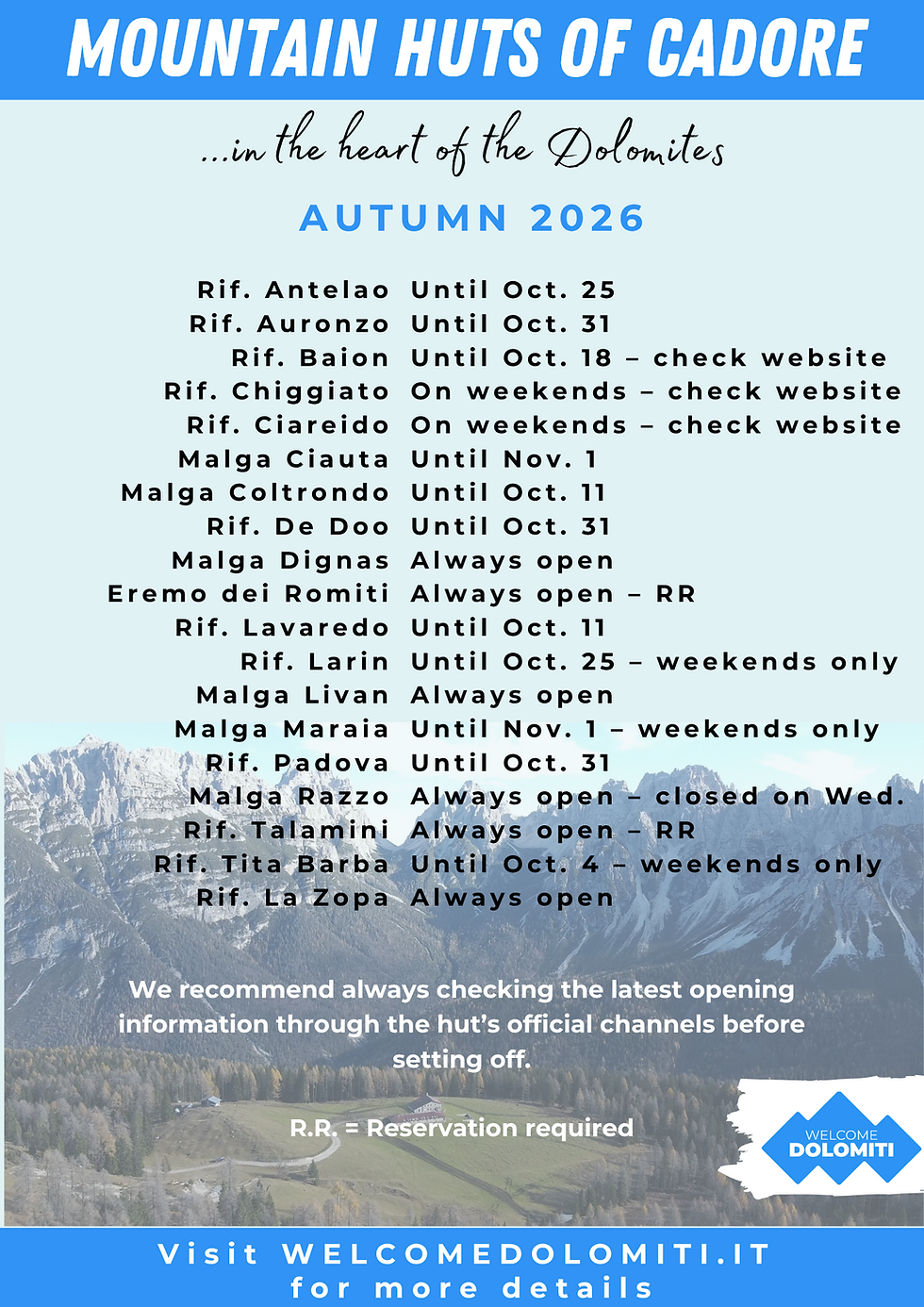
One of the best ways to experience the Dolomites is to stay in a rifugio, a traditional mountain hut where hikers and climbers can rest, eat, and admire breathtaking views. Some of the most famous ones include:
Rifugio Auronzo – at the foot of Tre Cime di Lavaredo, easily accessible and one of the most visited huts.
Rifugio Locatelli (Dreizinnenhütte) – offering perhaps the most iconic view of the Tre Cime.
Rifugio Lagazuoi – famous for its panoramic terrace with views over Cortina and the Tofane.
Rifugio Nuvolau – the oldest hut in the Dolomites, perched on a rocky summit.
Rifugio Rosetta – in the Pale di San Martino group, with spectacular high-altitude landscapes.
Rifugio Re Alberto I – at the foot of the Vajolet Towers, one of the most photogenic spots in the Dolomites.
Other iconic landmarks in the Dolomites
The Dolomites are not just about peaks – they are full of unique natural and cultural landmarks:
Lakes – crystal-clear alpine lakes like Lago di Braies and Lago di Sorapis are among the most photographed in the world.
Passes – scenic mountain passes such as Passo Giau, Passo Sella, and Passo Pordoi are legendary among cyclists and road-trippers.
Via Ferrata – the Dolomites are the birthplace of via ferrata climbing routes, offering adventurous ways to explore the mountains.

Enrosadira – a unique natural phenomenon where the Dolomite cliffs glow pink and orange at sunrise and sunset.

Ladin Culture – ancient traditions, language, and cuisine still thrive in valleys like Val Gardena and Alta Badia.

Winter Sports – as part of Dolomiti Superski, one of the world’s largest ski areas, the Dolomites are a top destination for skiing.

Iconic destinations in the Dolomites
Beyond the mountains and huts, the Dolomites are dotted with charming valleys and villages:
Cortina d’Ampezzo – Italy’s most glamorous mountain town, host of the 2026 Winter Olympics.

Val Gardena – a cultural gem with breathtaking scenery, where Ladin traditions thrive.

Alta Badia – known for gourmet cuisine and spectacular landscapes.

Val di Fassa – a paradise for hikers and skiers.

Cadore – the birthplace of painter Titian, surrounded by dramatic mountains and pristine lakes.

The Dolomites offer more than spectacular views — they are also a paradise for food lovers.
Take part in a traditional cooking class in the Dolomites and learn how to prepare authentic mountain dishes, from handmade pasta to local desserts.
You’ll discover the secrets of regional recipes passed down through generations and enjoy a genuine experience that combines culture, flavour and tradition.
Conclusion
So, where is the Dolomites located? The answer is: in northeastern Italy, between South Tyrol, Trentino, and Veneto, stretching from the Puster Valley to the Valsugana. With world-famous peaks like the Tre Cime di Lavaredo and Marmolada, iconic rifugi such as Lagazuoi and Locatelli, stunning lakes, scenic passes, and villages like Cortina d’Ampezzo, the Dolomites are one of the most extraordinary landscapes in Europe.


Comments